Description(説明)
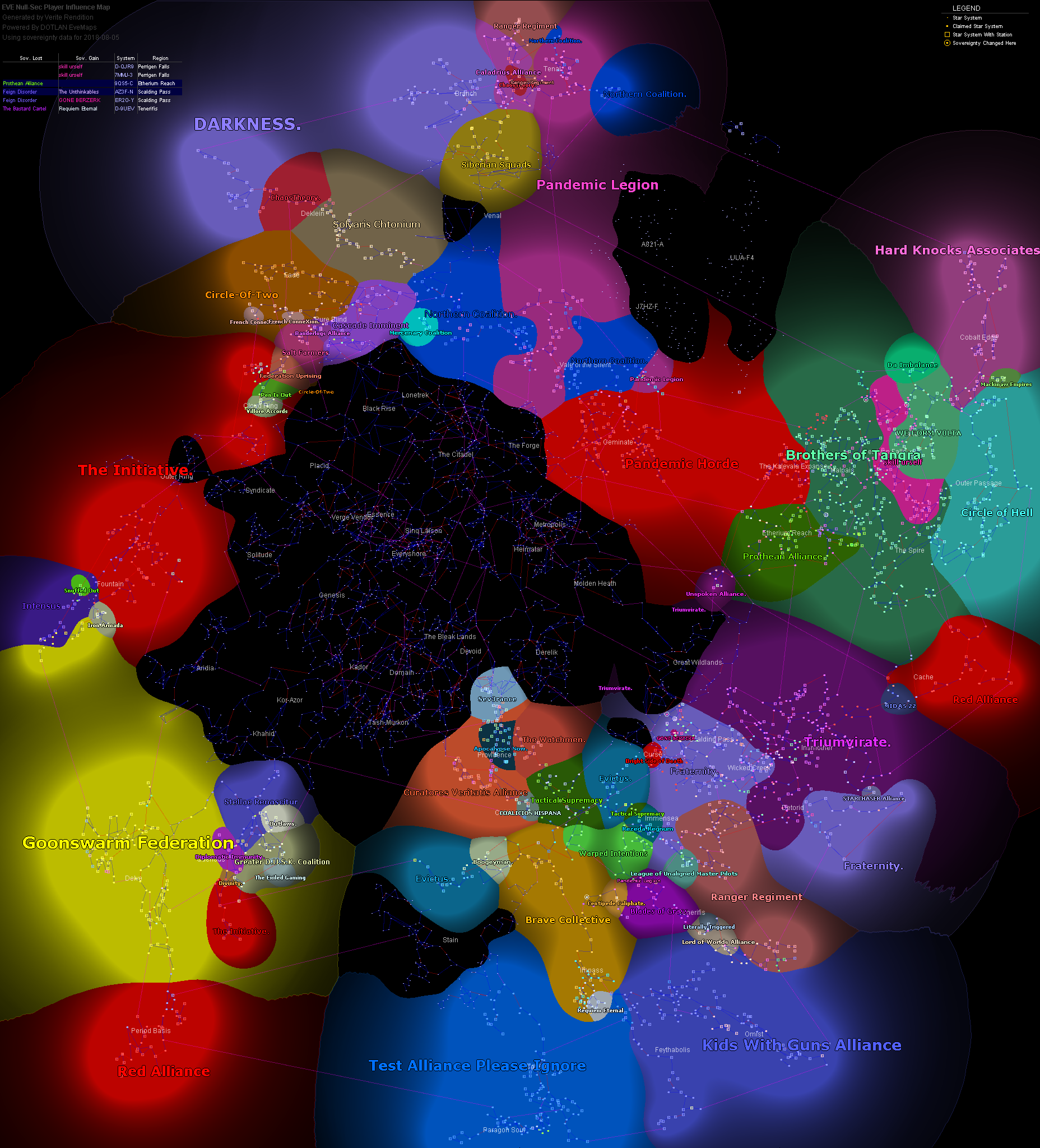
When attempting to determine a universal timekeeping standard between regions, one of the factions attempting to make their case came to be known as the Arithmetics. Comprised mainly of engineers and physicists, the Arithmetics sought to use naturally occurring phenomena and mathematical permutations thereof to dictate a "pure" clock. During this time, the region now known as Period Basis was an area of intensive research. The region's inordinately high concentration of pulsars of various frequencies led the physicists to try to find some lowest common denominator among the harmonics, or in the common parlance of astronomer Callentus Holzine, "a basis from which the shortest period can be rigorously calculated, with all larger units of time expressed as multiples of that period." Once the Traditionalists carried the day with their historical reconstructions of the Earth-standard clock, extensive scientific exploration of the region lapsed in importance, and today the region's large number of pulsars and other stellar phenomena are largely considered merely a curiosity.
リージョン共通の宇宙標準時を定めようとする試みの中で、独自の方法論を主張し「算術派」と呼ばれるようになった者たちがあった。算術派は主に技術者や物理学者から成り、自然現象や順列計算を用いて「純粋な」時計を決定しようとした。このとき徹底した研究の対象となったのが現在のピリオドベイシスである。このリージョンには様々な周期をもつパルサーが異常に密集しており、それら周期の最小公分母、つまり天文学者カレントゥスホルザインの有名な言葉を借りれば「厳密に計算で求めることができる最小単位時間で、それより長い全ての単位時間をその倍数で表現できるようなもの」を求めようとした。結局、伝統派が歴史にもとづいて再現した地球標準時が採用されることになったので、このリージョンの広範な科学的調査行は意義を失った。こんにちでは、密集パルサー群やその他の天体現象は単なる好奇心の対象となっている。
Adjacent Regions(隣接リージョン)
Related Constellations(構成コンステレーション)
Related Solar systems(構成ソーラーシステム)
6KFH-X
J8-G8K
N-39FI
NOK-FZ
OY3-DM
XOV7-5
コメント